Tag: life

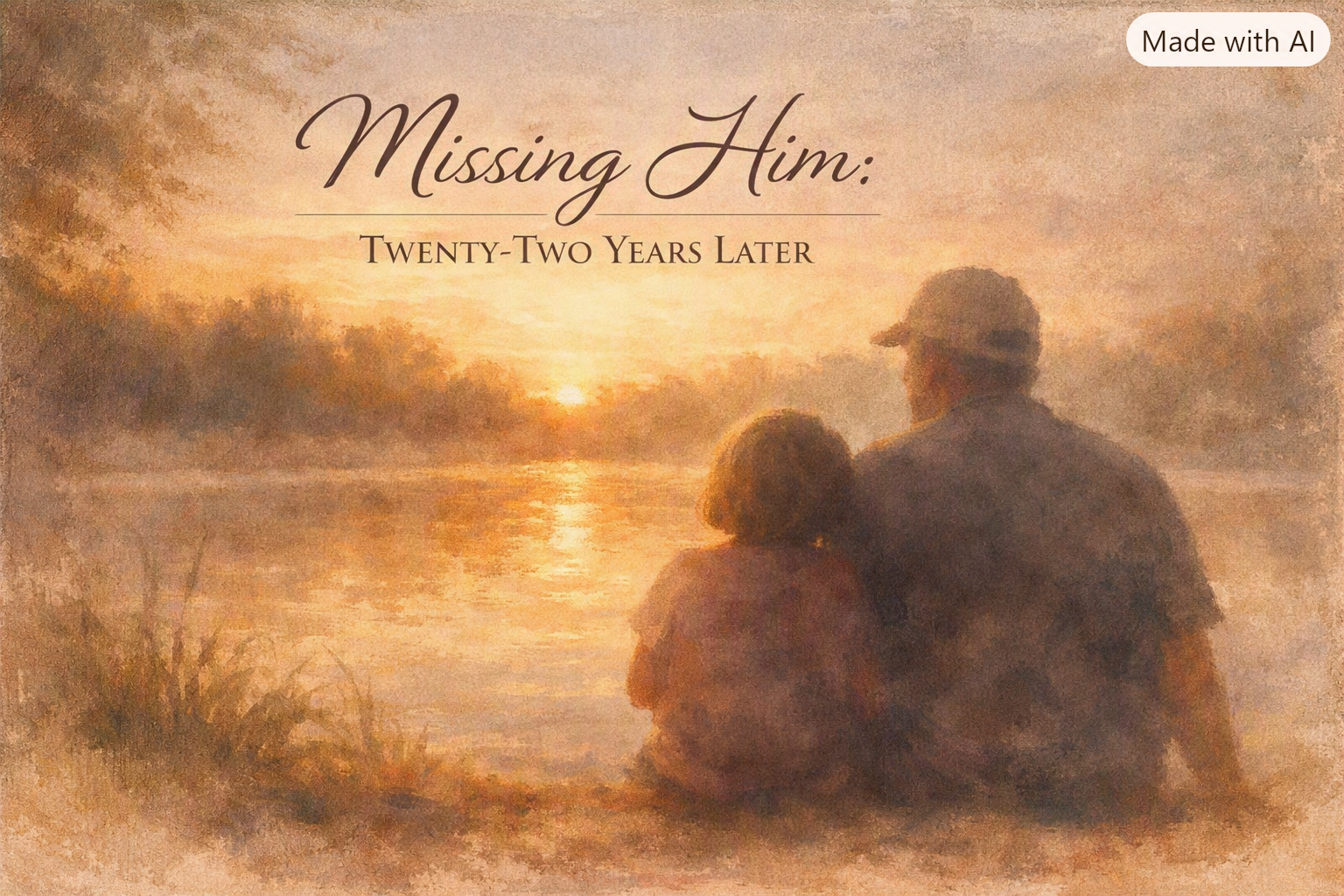
  • Missing Him: Twenty-Two Years Later

    Missing Him: Twenty-Two Years Later

    Twenty‑two years ago today, my dad died. Even now, I can still feel the shock of that night in my bones — the phone call from the hospital, the full‑body sobs as I drove to pick up my sister, the way grief swallowed every inch of air around me. I could write out every moment from that night; it lives in me as vividly as if it happened yesterday.

    The pain of losing him has softened over the years, but on days like today, it rises closer to the surface. Grief has a way of reminding you that love doesn’t disappear — it just changes shape.

    My dad was not a perfect man. He made mistakes long before I came along, mistakes that hurt the children who came before me in ways I’ll never fully understand. But for reasons I’ll never quite be able to explain, he got it mostly right with me. He was quiet, stoic, a man who answered questions but rarely volunteered anything. And yet — he showed up. Every softball game, every volleyball match, every cheerleading event. He was there.

    I’d say we were close, though I’m not sure how close you can truly be to someone who keeps their inner world locked away. Then again, maybe that’s just how parents are — loving us fiercely while holding their own stories quietly.

    In the later years of his life, I saw him trying. Trying to show up for the larger family. Trying to be better. Trying to make amends he never quite knew how to make. Through my parents’ divorce, he became one of those “underdog” souls I instinctively want to protect — the broken ones I want to make sure feel loved. I’ll never know how much that shaped the way I saw him.

    But I do know this: losing him was crushing. And even now, I still think of him as my hero. Not because he was flawless or full of wisdom or the kind of dad who always knew what to say. He was my hero because he never stopped trying. He was flawed, but he did his best to make me feel like I mattered, like I had a home, like I was loved.

    For that, I am endlessly grateful.

    I love you, Dad. Missing you today and every day.

    If any part of this met you where you are, I share more reflections by email.

    Subscribe

  • When Old Wounds Echo Through New Moments

    When Old Wounds Echo Through New Moments

    This week, something small and seemingly unrelated cracked open a place in me I didn’t expect. It wasn’t dramatic. It wasn’t even about me. But it stirred up emotions I’ve carried for a long time — the kind that sit quietly until life brushes against them just right.

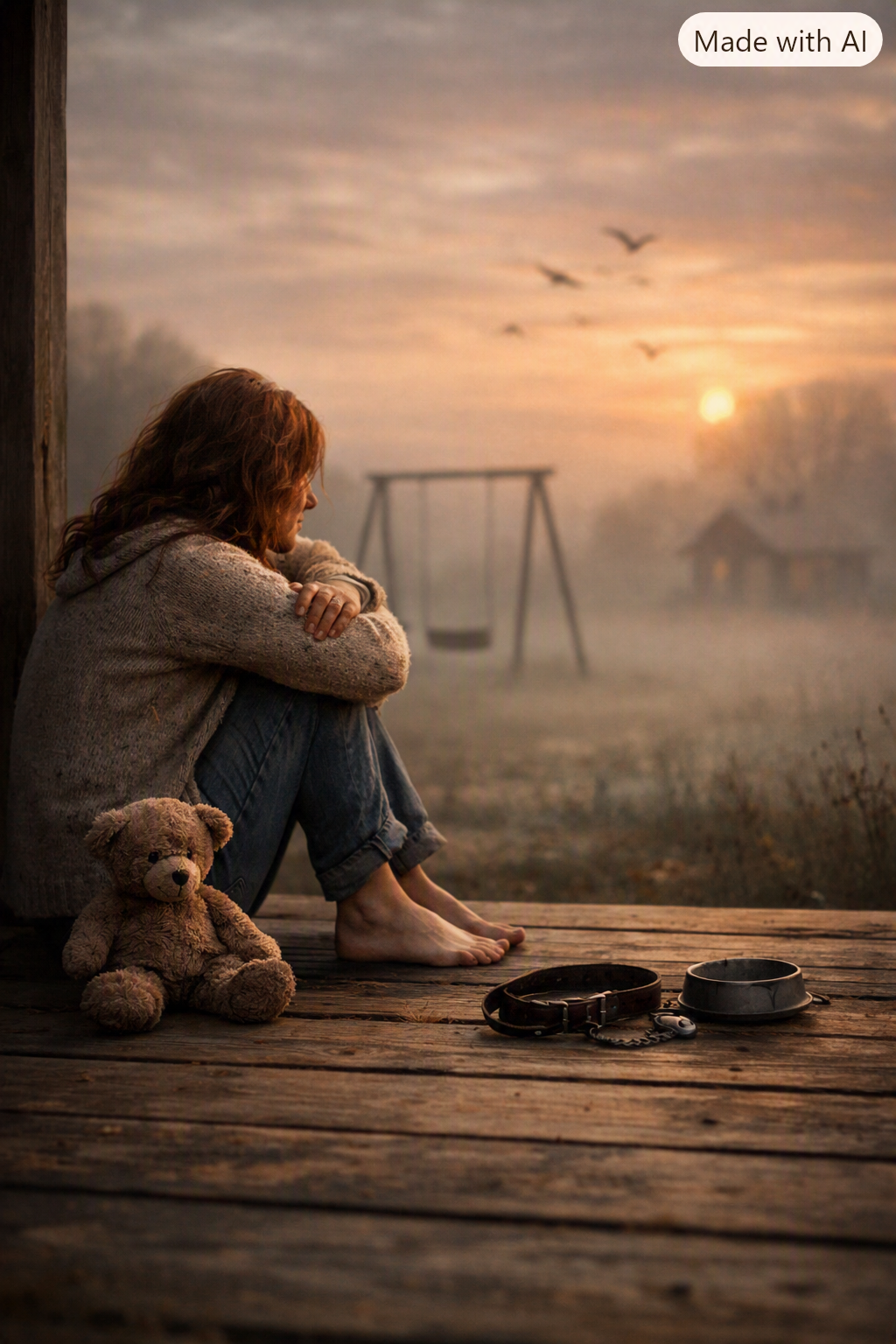
    My mom is preparing to move to a new state, and her new HOA only allows one pet. She has three. Two of them are registered emotional support animals, which technically means she could make the case to keep all of them. I don’t know what thoughts she wrestled with or how heavy the decision felt for her. All I saw was the simple, swift act of rehoming two animals she has loved for years — one for almost a decade.

    And it stopped me in my tracks.

    My heart didn’t break for her, though I’m sure she had her own heartbreak to carry. My heart broke for the animals — for the sudden shift in their world, for the loss of the security they trusted, for the feeling of being left. They were being sent somewhere partially familiar, but not home. Not the place where they had been loved.

    The intensity of my reaction surprised me. It was deeper than empathy. It was personal.

    If I’m honest, it’s because I’ve felt that kind of abandonment before. More than once. During my parents’ divorce, when my mom seemed to choose a new man over me. And again at the end of my freshman year of high school, when she chose to move to Florida and I stayed behind. Those are stories with layers I’ll unpack in other posts, but the truth is simple: those moments shaped me.

    They made me someone who fights for the underdog. Someone who cannot bear the thought of anyone — person or animal — feeling unwanted, unseen, or unloved. Someone who steps in, even when it costs me.

    And that part of me, the part that aches at the idea of abandonment, is also the part that led me into an abusive marriage. I kept believing that if I could just love him enough, make him feel wanted enough, prove he wasn’t alone, everything would finally be okay. I didn’t realize I was reenacting an old wound — trying to save someone so I wouldn’t have to feel the pain of being left again.

    This week reminded me that the things we carry from childhood don’t disappear. They echo. They surface in unexpected places. They shape the way we love, the way we protect, the way we choose.

    And sometimes, they show us exactly where we still need healing.

    If any part of this met you where you are, I share more reflections by email.

    Subscribe
  • Learning to Feel Again — Part II: The Long Climb Out

    Learning to Feel Again — Part II: The Long Climb Out

    Climbing out of depression wasn’t a moment. It wasn’t a breakthrough or a revelation or a sudden shift in the way the world looked. It was slow. It was uneven. It was a years‑long process of inching forward, slipping back, and trying again.

    After those first brutal months, when I could barely function and the days blurred together, things didn’t magically get better just because I had a therapist and the right medication. Survival became a routine. I measured progress in tiny, almost invisible ways — answering one email, taking a shower before noon, remembering to eat something besides whatever was closest. Healing looked nothing like what I thought it would. It wasn’t graceful. It wasn’t inspiring. It was work.

    There were days when I felt like I was finally coming up for air, and days when I sank right back under. My therapist reminded me often that depression doesn’t release its grip all at once. It loosens slowly, and sometimes it tightens again without warning. I learned to stop expecting myself to “snap out of it.” I learned to accept that healing wasn’t linear, and that didn’t mean I was failing.

    My foster dog — the one who saved me — stayed by my side through all of it. She didn’t care whether I had accomplished anything that day. She didn’t care if I cried or if I couldn’t get off the couch. She loved me in a way that didn’t require performance. Her presence made the world feel a little less sharp, a little less impossible. Sometimes healing begins with something small and quiet, something that simply refuses to leave.

    As the months turned into years, I found myself slowly becoming more functional. I could work again. I could make decisions without feeling like the weight of them might crush me. But even as life became more manageable, I didn’t realize how much of myself I had lost along the way. Depression had taken so much, and survival had taken the rest.

    And here’s the part I didn’t understand at the time: Coming out of depression didn’t mean I started feeling again. I wasn’t drowning anymore, but I wasn’t fully alive either. I was steady, but numb. The fog had lifted, but the world still felt muted. I could function — sometimes even well — but I wasn’t connected to myself. I wasn’t sad, but I wasn’t joyful. I wasn’t overwhelmed, but I wasn’t present. I was simply… there.

    Only recently have I been able to start decreasing my medication. It’s taken years to get here, and even now, I move slowly and carefully. I don’t take this step lightly. I know what the darkness feels like, and I know how easily it can return. But I also know myself better now. I know what to look for. I know when to reach out. I know that healing doesn’t mean pretending the past didn’t happen — it means learning how to live with it without letting it define me.

    The long climb out of depression wasn’t heroic. It wasn’t pretty. It was messy and exhausting and full of days where I questioned whether I was making any progress at all. But it was real. And it was mine. And it brought me to a place where I could finally begin the next part of the journey — learning how to feel again.

    If any part of this met you where you are, I share more reflections by email.

    Subscribe