Tag: writing

  • The More I’m Becoming

    The More I’m Becoming

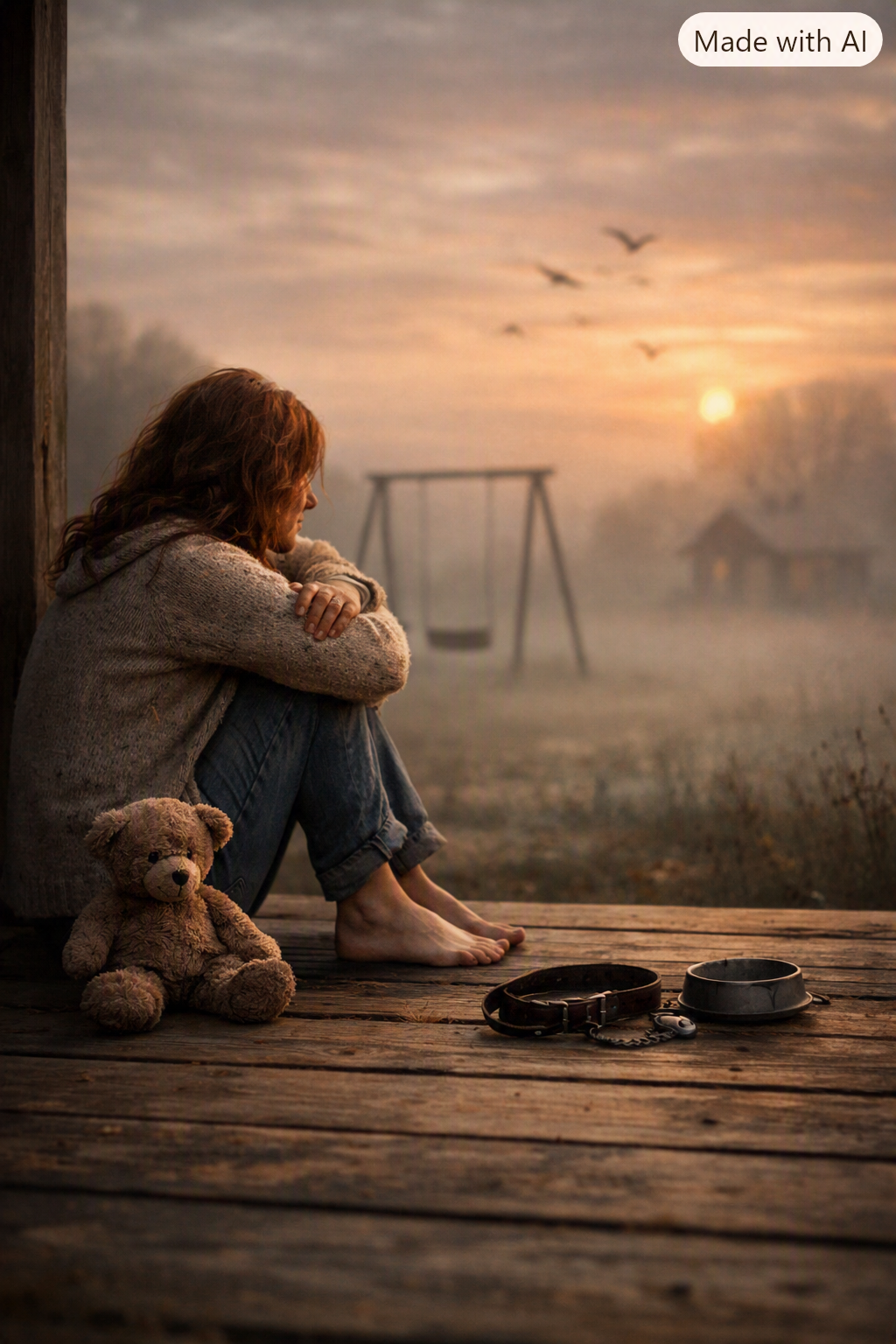
    For as long as I can remember, I wanted to be a mom. It wasn’t a passing wish or a soft hope — it was the one thing I knew to be true about myself. I spent years feeling like I had to justify that desire, explain it, defend it, prove it. Maybe a trained professional could trace that longing back to pieces of my childhood, but whatever its origin, it lived in me with certainty.

    And when I finally became a mom to my daughter, the gratitude was so immense it felt like it lived in my bones. Some days it still rises up so strongly it brings me to tears. Loving her is one of the clearest, fiercest things in my life.

    But lately, something quieter has been happening underneath that love — a realization I didn’t expect.

    In the years I spent fighting to become a mom, I fought so hard for that one identity that I lost sight of the others. I poured everything into proving I was meant for motherhood, and somewhere along the way, I stopped noticing the parts of myself that wanted more, too.

    Now those parts are resurfacing. Now I’m remembering dreams I set aside. Now I’m wanting things I didn’t give myself permission to want before.

    And with that wanting comes a complicated sadness. A fear that maybe it means I cherish being a mom less than I used to, or less than I thought I would, or less than I’m supposed to. A fear that acknowledging my longing for more somehow betrays my daughter.

    I never want her to think I wanted anything more than being her mom. I never want her to feel like she wasn’t enough. I never want her to carry the weight of my becoming.

    But I also know — even if I’m still learning to believe it — that motherhood was never meant to be the whole of me. It was meant to be one of the truest parts, not the only one.

    There has to be room for both. Room to love her with a heart that feels like it could burst. And room to grow into the woman I’m still becoming.

    I struggle with the gray of that. With the unknown. With the quiet moments when longing shows up and asks me to look at the life I didn’t choose. But I’m trying to trust that wanting more doesn’t mean I love her less. It means I’m human. It means I’m expanding. It means I’m learning to hold both devotion and desire in the same hands.

    Maybe one day I’ll figure out how all the pieces fit. Until then, I pray I can be the best mom I can be — not by shrinking myself, but by showing her what a whole, well‑rounded woman looks like. A woman who never makes herself less so someone else can feel whole.

    A woman who teaches her daughter, simply by living, that love doesn’t require disappearing.

    If any part of this met you where you are, I share more reflections by email.

    Subscribe

  • Bringing It Into The Light – PART VIII: Writing as a Lifeline

    Bringing It Into The Light – PART VIII: Writing as a Lifeline

    This post is part of my “Bringing It Into the Light” series, where I explore the journey of naming, healing, and reclaiming my voice.

    Writing isn’t just helping me process what happened — it’s helping me reconnect with myself. It’s become a lifeline, a way to understand my own story, a way to bring things out of the dark and into the light.

    I write to heal. I write to connect. I write to make sense of the parts of my life that once felt impossible to name. And I write because I hope it helps someone else feel less alone.

    Writing is how I stay honest with myself. It’s how I track my growth. It’s how I remember that healing is not a destination — it’s a practice.

    This series is not an ending. It’s an invitation. An invitation to stay with me as I grow, as I learn, as I continue bringing things into the light.

    [Return to the series overview →]

    If any part of this met you where you are, I share more reflections by email.

    Subscribe

  • Bringing It Into The Light – PART VI: Reclaiming My Voice

    Bringing It Into The Light – PART VI: Reclaiming My Voice

    This post is part of my “Bringing It Into the Light” series, where I explore the journey of naming, healing, and reclaiming my voice.

    Survival changes you.

    It teaches you to stay quiet, to stay small, to stay contained. But healing asks something different. It asks you to expand again. To trust again. To speak again.

    Reclaiming my voice isn’t happening all at once. It is happening through writing — through the slow, steady practice of telling the truth without apologizing for it. Writing is helping me rebuild parts of myself I once believed were gone: my intuition, my boundaries, my confidence, my sense of identity.

    I am beginning to understand what I like, what I need, what I deserve.

    I am beginning to trust my own perceptions.

    I am beginning to feel connected to myself again.

    And as I write, I notice something else: My voice is not just returning — it is evolving. It is becoming clearer, stronger, more grounded. It is becoming mine.

    Healing is ongoing. Reclaiming my voice is ongoing. And every time I speak the truth — even quietly — I come home to myself a little more.

    [Return to the series overview →]

    If any part of this met you where you are, I share more reflections by email.

    Subscribe

  • Bringing It Into The Light – PART V: Shame, Empathy, and the Work of Healing

    Bringing It Into The Light – PART V: Shame, Empathy, and the Work of Healing

    This post is part of my “Bringing It Into the Light” series, where I explore the journey of naming, healing, and reclaiming my voice.

    Shame thrives in secrecy.

    It grows in the dark, in the quiet, in the places where you convince yourself that your experience is too embarrassing, too messy, too complicated to share. For years, shame kept me silent. It told me that speaking the truth would make people judge me. It told me that I should have known better. It told me that what happened was somehow my fault.

    Brené Brown says that shame cannot survive being spoken.

    Empathy is its antidote.

    I didn’t understand that until the day my coworker shared her story. Her empathy loosened something in me — something that had been locked tight for years. It didn’t erase the shame, but it weakened it. It made space for compassion. It made space for truth.

    Healing is not a single moment.

    It is a series of small, brave acts.

    Telling the truth.

    Letting someone see you.

    Letting yourself be human.

    Writing has become part of that work.

    Each sentence I put on the page disarms a little more shame.

    Each story I share makes the silence less powerful.

    Each truth I name makes the past less heavy.

    [Return to the series overview →]

    If any part of this met you where you are, I share more reflections by email.

    Subscribe

  • The Quiet Return of Myself

    The Quiet Return of Myself

    There are little moments that hit me harder than I expect. Not dramatic ones — not the big life changes or the milestones — but the tiny, ordinary flashes that make me realize just how much of myself I had lost.

    Singing at full volume in the car. Dancing around the kitchen while I make dinner. Picking up my guitar again, even though I still barely know how to play it.

    These small things used to be effortless parts of who I was. Joyful, instinctive, unselfconscious. And somewhere along the way, I stopped doing them. Not all at once, not in a way I noticed. They just slipped quietly out of my life, one by one, until the silence felt normal.

    I didn’t realize how long they’d been gone until recently, when they started coming back.

    It wasn’t intentional. One day I just started singing out loud, and halfway through the second or third song, it hit me: I haven’t done this in years. The realization landed with a mix of sadness and relief — sadness for how long I’d been holding myself small, and relief that something inside me was finally loosening.

    As these pieces return, they bring waves of emotion with them. Sometimes it’s overwhelming. Sometimes it’s tender. Sometimes it’s a grief I didn’t know I was carrying. I’m sad that I let these parts of me disappear for so long. I’m sad that I learned to quiet myself to fit into a life that didn’t make space for me.

    But I’m also deeply, fiercely grateful.

    Grateful that I’m reconnecting with the things that make me feel alive. Grateful that I’m remembering who I am when I’m not shrinking. Grateful that I am, slowly and steadily, coming back to myself.

    This return isn’t loud or dramatic. It’s happening in the kitchen, in the car, in the soft corners of my everyday life. And maybe that’s the most beautiful part — that I’m finding myself again in the places I didn’t realize I’d abandoned.

    I’m learning to take up space again. I’m learning to feel joy without apologizing for it. I’m learning to be myself, fully, without hesitation.

    And I’m not losing her again.

    If any part of this met you where you are, I share more reflections by email.

    Subscribe
  • The First Disappearance: What I Learned in the Dark

    The First Disappearance: What I Learned in the Dark

    I’ve been writing lately about the depression I carried through my marriage — the quiet kind that settles into your bones when you’ve spent too long being unseen. But as I’ve been exploring that part of my story, another memory has been pushing its way to the surface. A much older one. A root system I didn’t realize was still alive under everything.

    It was during the first couple of years after my parents divorced. I was twelve, maybe thirteen. Those years were marked by a kind of emotional abandonment I didn’t have language for at the time. My mother was physically present but emotionally elsewhere, wrapped up in a man who seemed to take pleasure in reminding me I was too much, too dramatic, too inconvenient.

    He wasn’t physically violent, but the verbal and emotional abuse was constant. He made fun of me, mocked me, belittled me. And my mother let him.

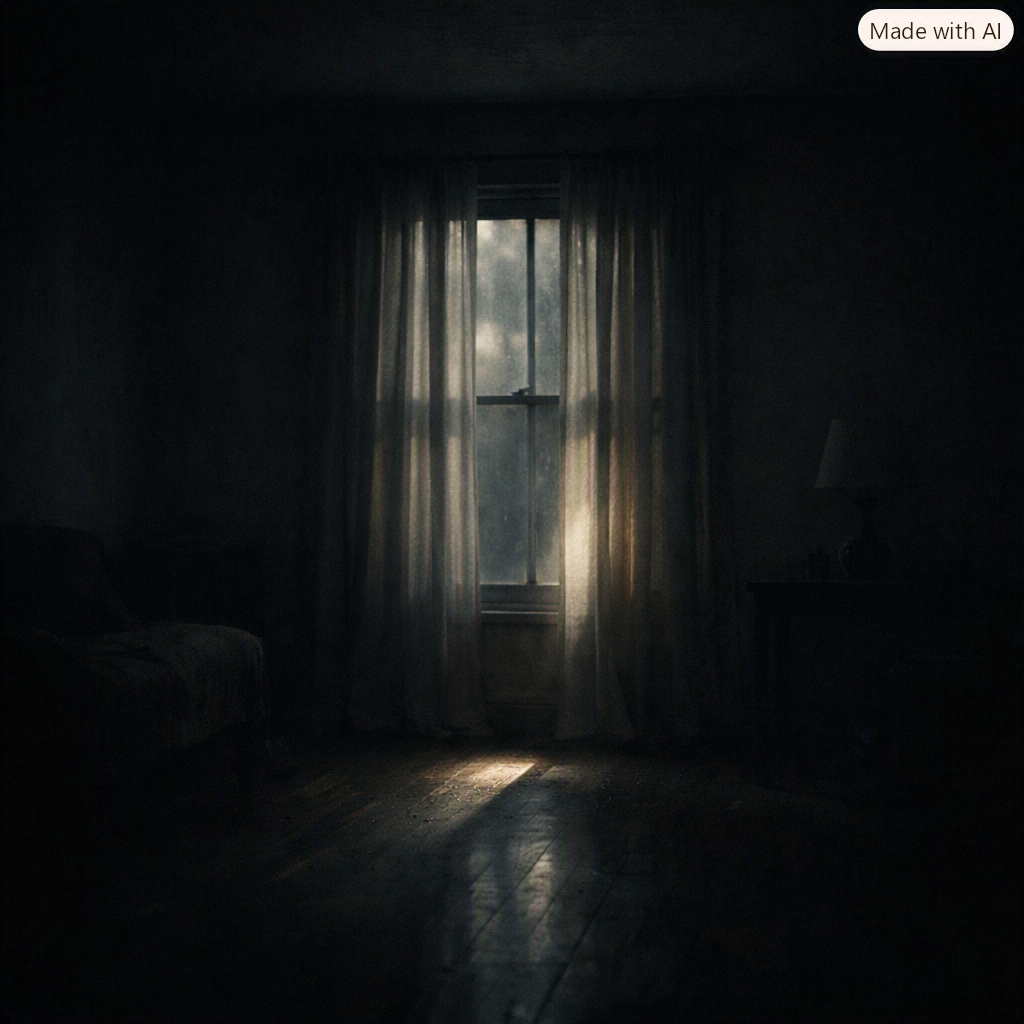
    I remember coming home from school and going straight to the living room. I would draw the curtains closed and sit in the dark. It wasn’t a dramatic gesture — it was the only place I felt like I could disappear. No one asked why. No one wondered what was happening inside me. The man would come into the room, throw the curtains open, and announce to my mother that she had “a vampire for a daughter.”

    I learned early that being unseen was safer than being noticed.

    I didn’t know the word depression then. Back in the early nineties, it wasn’t something people talked about unless they were whispering about someone who needed to be “put away.” I just knew I felt heavy and lonely and wrong. I knew I didn’t fit anywhere. And I knew that the adults around me weren’t going to help me make sense of any of it.

    Looking back now, I can see that this was the beginning of my disappearance — the first time I folded myself inward because the world around me didn’t have room for my pain.

    This is where the pattern started.

    This piece is part of my series, Disappearing: A Story in Three Parts.” [Return to the series overview →]

    If any part of this met you where you are, I share more reflections by email.

    Subscribe
  • Bringing It Into the Light — Part II: The Silence I Lived In

    Bringing It Into the Light — Part II: The Silence I Lived In

    This post is part of my “Bringing It Into the Light” series, where I explore the journey of naming, healing, and reclaiming my voice.

    There are forms of abuse that never announce themselves. They don’t begin with shouting or threats or broken things. They begin quietly — in the small ways you learn to minimize your own experience, rationalize someone else’s behavior, and shrink yourself just enough to keep the peace. Before you even realize what’s happening, silence becomes the language you live in.

    For me, silence didn’t arrive all at once. It formed slowly, almost gently, in the spaces where I stopped trusting my own reactions. When something hurt, I told myself it wasn’t that bad. When something felt wrong, I convinced myself I was overreacting. When I felt dismissed, I tried to be more understanding. Each time I softened my truth, I made myself a little smaller.

    That’s how secrecy begins — not with a conscious decision to hide, but with the gradual erosion of your voice.

    You learn to keep certain things to yourself. You learn to avoid conversations that might lead to conflict. You learn to swallow discomfort before it becomes visible. You learn to carry pain quietly because speaking it feels dangerous.

    And the world around you often reinforces that silence. People see the surface — the functioning, the smiling, the managing — and assume everything is fine. When no one notices the shrinking, you start to believe it’s normal. You start to believe it’s your job to endure quietly.

    Silence becomes a survival strategy. Not because you’re weak, but because you’re trying to stay intact.

    It’s easier to rationalize than to confront. Easier to minimize than to name what’s happening. Easier to disappear inside yourself than to risk being misunderstood.

    The danger of this kind of silence is that it feels protective at first. It feels like control. But over time, it becomes a cage. You lose the ability to articulate your needs. You lose the confidence to trust your instincts. You lose the sense that your experience matters. You lose your voice — not because someone stole it, but because you learned to stop using it.

    This is why the silence matters. Because so many people live in it long before they ever recognize their situation as abuse. Because silence is often the first wound — the one that makes all the others possible. Because naming the silence is often the first step toward bringing anything into the light.

    Part II isn’t about the events themselves. It’s about the quiet conditions that allowed them to take root. It’s about the shrinking, the rationalizing, the minimizing — the subtle ways you learn to disappear. It’s about understanding that silence is not peace; it’s a warning.

    And it’s about beginning to reclaim the voice you didn’t realize you’d lost.

    [Return to the series overview →]

    If any part of this met you where you are, I share more reflections by email.

    Subscribe
  • Missing Him: Twenty-Two Years Later

    Missing Him: Twenty-Two Years Later

    Twenty‑two years ago today, my dad died. Even now, I can still feel the shock of that night in my bones — the phone call from the hospital, the full‑body sobs as I drove to pick up my sister, the way grief swallowed every inch of air around me. I could write out every moment from that night; it lives in me as vividly as if it happened yesterday.

    The pain of losing him has softened over the years, but on days like today, it rises closer to the surface. Grief has a way of reminding you that love doesn’t disappear — it just changes shape.

    My dad was not a perfect man. He made mistakes long before I came along, mistakes that hurt the children who came before me in ways I’ll never fully understand. But for reasons I’ll never quite be able to explain, he got it mostly right with me. He was quiet, stoic, a man who answered questions but rarely volunteered anything. And yet — he showed up. Every softball game, every volleyball match, every cheerleading event. He was there.

    I’d say we were close, though I’m not sure how close you can truly be to someone who keeps their inner world locked away. Then again, maybe that’s just how parents are — loving us fiercely while holding their own stories quietly.

    In the later years of his life, I saw him trying. Trying to show up for the larger family. Trying to be better. Trying to make amends he never quite knew how to make. Through my parents’ divorce, he became one of those “underdog” souls I instinctively want to protect — the broken ones I want to make sure feel loved. I’ll never know how much that shaped the way I saw him.

    But I do know this: losing him was crushing. And even now, I still think of him as my hero. Not because he was flawless or full of wisdom or the kind of dad who always knew what to say. He was my hero because he never stopped trying. He was flawed, but he did his best to make me feel like I mattered, like I had a home, like I was loved.

    For that, I am endlessly grateful.

    I love you, Dad. Missing you today and every day.

    If any part of this met you where you are, I share more reflections by email.

    Subscribe
  • When Old Wounds Echo Through New Moments

    When Old Wounds Echo Through New Moments

    This week, something small and seemingly unrelated cracked open a place in me I didn’t expect. It wasn’t dramatic. It wasn’t even about me. But it stirred up emotions I’ve carried for a long time — the kind that sit quietly until life brushes against them just right.

    My mom is preparing to move to a new state, and her new HOA only allows one pet. She has three. Two of them are registered emotional support animals, which technically means she could make the case to keep all of them. I don’t know what thoughts she wrestled with or how heavy the decision felt for her. All I saw was the simple, swift act of rehoming two animals she has loved for years — one for almost a decade.

    And it stopped me in my tracks.

    My heart didn’t break for her, though I’m sure she had her own heartbreak to carry. My heart broke for the animals — for the sudden shift in their world, for the loss of the security they trusted, for the feeling of being left. They were being sent somewhere partially familiar, but not home. Not the place where they had been loved.

    The intensity of my reaction surprised me. It was deeper than empathy. It was personal.

    If I’m honest, it’s because I’ve felt that kind of abandonment before. More than once. During my parents’ divorce, when my mom seemed to choose a new man over me. And again at the end of my freshman year of high school, when she chose to move to Florida and I stayed behind. Those are stories with layers I’ll unpack in other posts, but the truth is simple: those moments shaped me.

    They made me someone who fights for the underdog. Someone who cannot bear the thought of anyone — person or animal — feeling unwanted, unseen, or unloved. Someone who steps in, even when it costs me.

    And that part of me, the part that aches at the idea of abandonment, is also the part that led me into an abusive marriage. I kept believing that if I could just love him enough, make him feel wanted enough, prove he wasn’t alone, everything would finally be okay. I didn’t realize I was reenacting an old wound — trying to save someone so I wouldn’t have to feel the pain of being left again.

    This week reminded me that the things we carry from childhood don’t disappear. They echo. They surface in unexpected places. They shape the way we love, the way we protect, the way we choose.

    And sometimes, they show us exactly where we still need healing.

    If any part of this met you where you are, I share more reflections by email.

    Subscribe

  • Learning to Feel Again — Part II: The Long Climb Out

    Learning to Feel Again — Part II: The Long Climb Out

    Climbing out of depression wasn’t a moment. It wasn’t a breakthrough or a revelation or a sudden shift in the way the world looked. It was slow. It was uneven. It was a years‑long process of inching forward, slipping back, and trying again.

    After those first brutal months, when I could barely function and the days blurred together, things didn’t magically get better just because I had a therapist and the right medication. Survival became a routine. I measured progress in tiny, almost invisible ways — answering one email, taking a shower before noon, remembering to eat something besides whatever was closest. Healing looked nothing like what I thought it would. It wasn’t graceful. It wasn’t inspiring. It was work.

    There were days when I felt like I was finally coming up for air, and days when I sank right back under. My therapist reminded me often that depression doesn’t release its grip all at once. It loosens slowly, and sometimes it tightens again without warning. I learned to stop expecting myself to “snap out of it.” I learned to accept that healing wasn’t linear, and that didn’t mean I was failing.

    My foster dog — the one who saved me — stayed by my side through all of it. She didn’t care whether I had accomplished anything that day. She didn’t care if I cried or if I couldn’t get off the couch. She loved me in a way that didn’t require performance. Her presence made the world feel a little less sharp, a little less impossible. Sometimes healing begins with something small and quiet, something that simply refuses to leave.

    As the months turned into years, I found myself slowly becoming more functional. I could work again. I could make decisions without feeling like the weight of them might crush me. But even as life became more manageable, I didn’t realize how much of myself I had lost along the way. Depression had taken so much, and survival had taken the rest.

    And here’s the part I didn’t understand at the time: Coming out of depression didn’t mean I started feeling again. I wasn’t drowning anymore, but I wasn’t fully alive either. I was steady, but numb. The fog had lifted, but the world still felt muted. I could function — sometimes even well — but I wasn’t connected to myself. I wasn’t sad, but I wasn’t joyful. I wasn’t overwhelmed, but I wasn’t present. I was simply… there.

    Only recently have I been able to start decreasing my medication. It’s taken years to get here, and even now, I move slowly and carefully. I don’t take this step lightly. I know what the darkness feels like, and I know how easily it can return. But I also know myself better now. I know what to look for. I know when to reach out. I know that healing doesn’t mean pretending the past didn’t happen — it means learning how to live with it without letting it define me.

    The long climb out of depression wasn’t heroic. It wasn’t pretty. It was messy and exhausting and full of days where I questioned whether I was making any progress at all. But it was real. And it was mine. And it brought me to a place where I could finally begin the next part of the journey — learning how to feel again.

    If any part of this met you where you are, I share more reflections by email.

    Subscribe