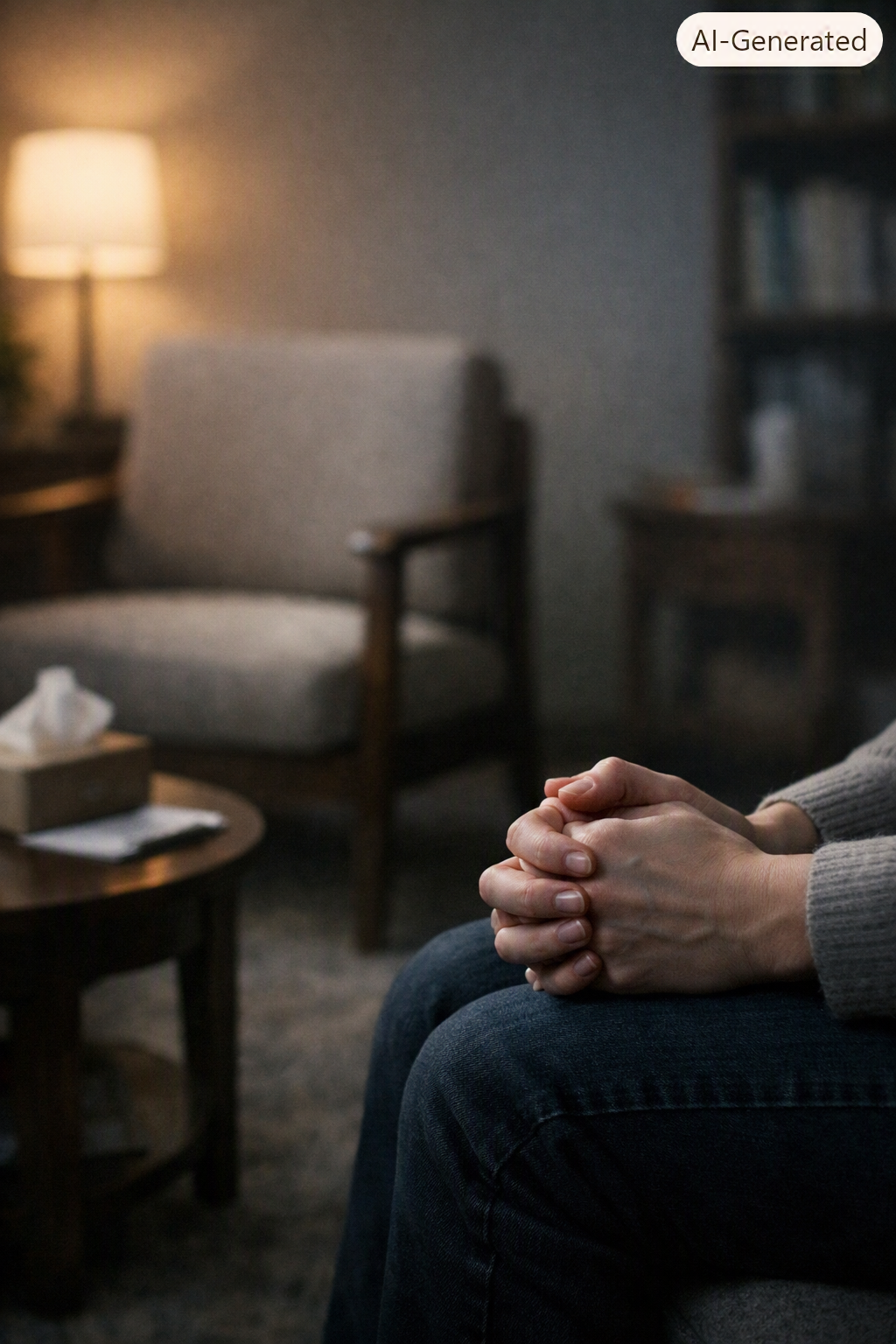
There was a stretch of years when I kept believing we were on the edge of change. We sat in virtual therapy rooms, session after session, trying to untangle the same knots. He would make promises, soften his tone, say the right words just long enough for me to think we were finally moving forward.
But the progress never held.
It always circled back to the same place: I would do something he didn’t like, and he would react with anger — yelling, insults, blame.
Toward the end, I brought it up again in therapy. I needed him to hear how deeply the volatility was affecting me. The counselor asked him why he reacted that way, and every answer was a variation of the same refrain:
She made me. It was her fault. She caused it.
She tried to help him see that he had control over his reactions, that he could walk away instead of exploding. He disagreed. Eventually she stopped trying because there was nowhere for the conversation to go.
I remember sitting there, feeling the weight of a truth I didn’t want to face: he wasn’t interested in changing. And I couldn’t understand why he couldn’t see how hurtful his behavior was, or why he wouldn’t even try to get help.
I kept hoping that if I explained it clearly enough, if I loved him hard enough, if I stayed patient long enough, something would shift.
But nothing shifted.
By the time we left that session, something in me had changed. I didn’t say it out loud, and I didn’t fully understand it yet, but a quiet truth had settled in my body: I was the only one fighting for change.
And when you are the only one trying, you are not in a partnership — you are in a cycle.
Part I ends here — in the fog, in the ache, in the slow unraveling of hope.
Part II begins with the moment everything snapped into clarity.
If any part of this met you where you are, I share more reflections by email.
Subscribe